
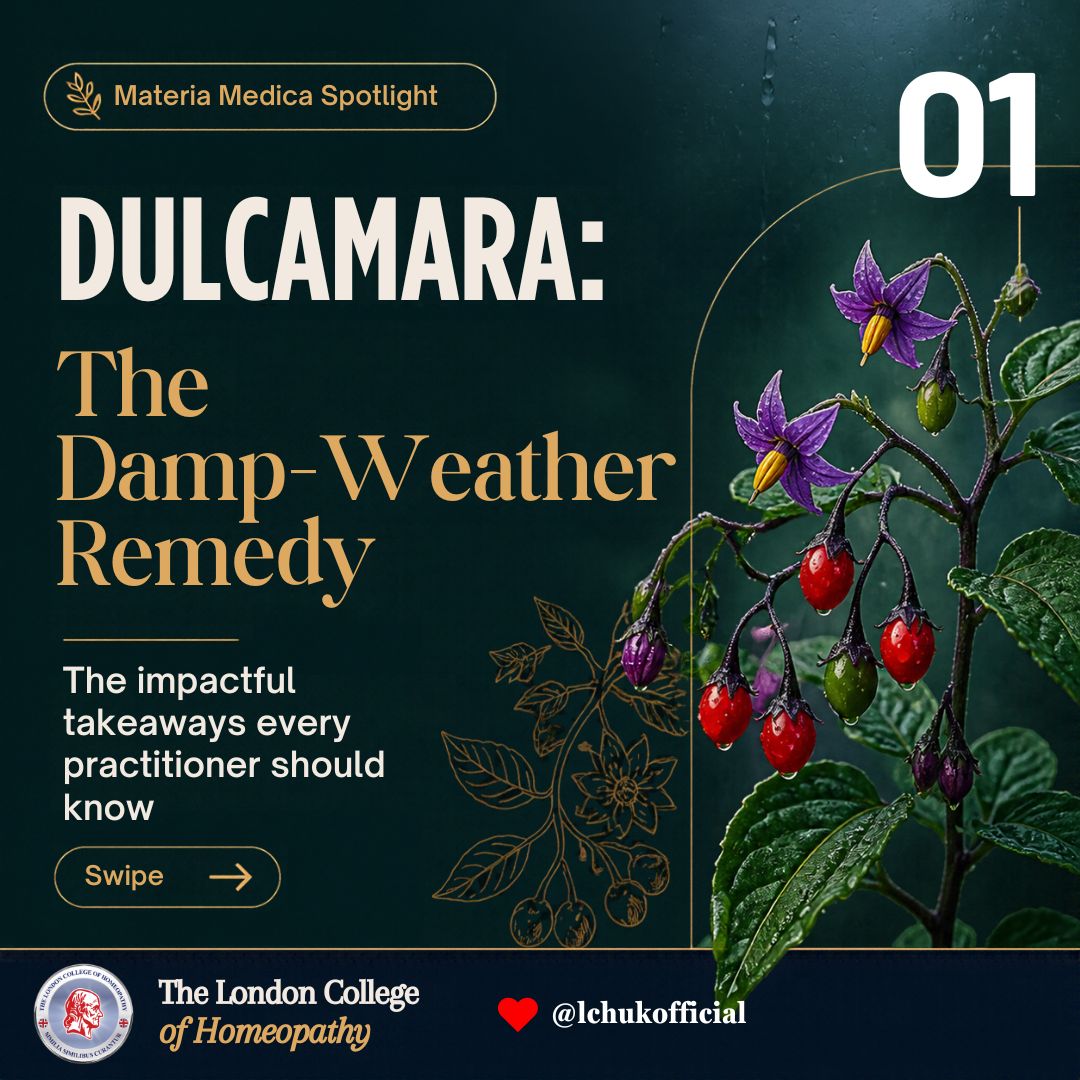
The Autumnal Weather-Change Paradox
Sudden atmospheric and seasonal transitions represent a perpetual challenge in clinical homeopathic practice. The sharp shift from warm, late-summer days to chilled, damp nights—or unexpected exposure to drenching rains—frequently triggers a rapid onset of acute physical and catarrhal ailments. When patients present with acute mucus hyper-secretions, sudden bowel disturbances, neuralgias, or joint stiffness following these specific atmospheric fluctuations, selecting the precise, pathologically suited remedy is essential for prompt clinical recovery.
This article distils the most essential, counterintuitive, and clinically high-yield takeaways on Dulcamara.
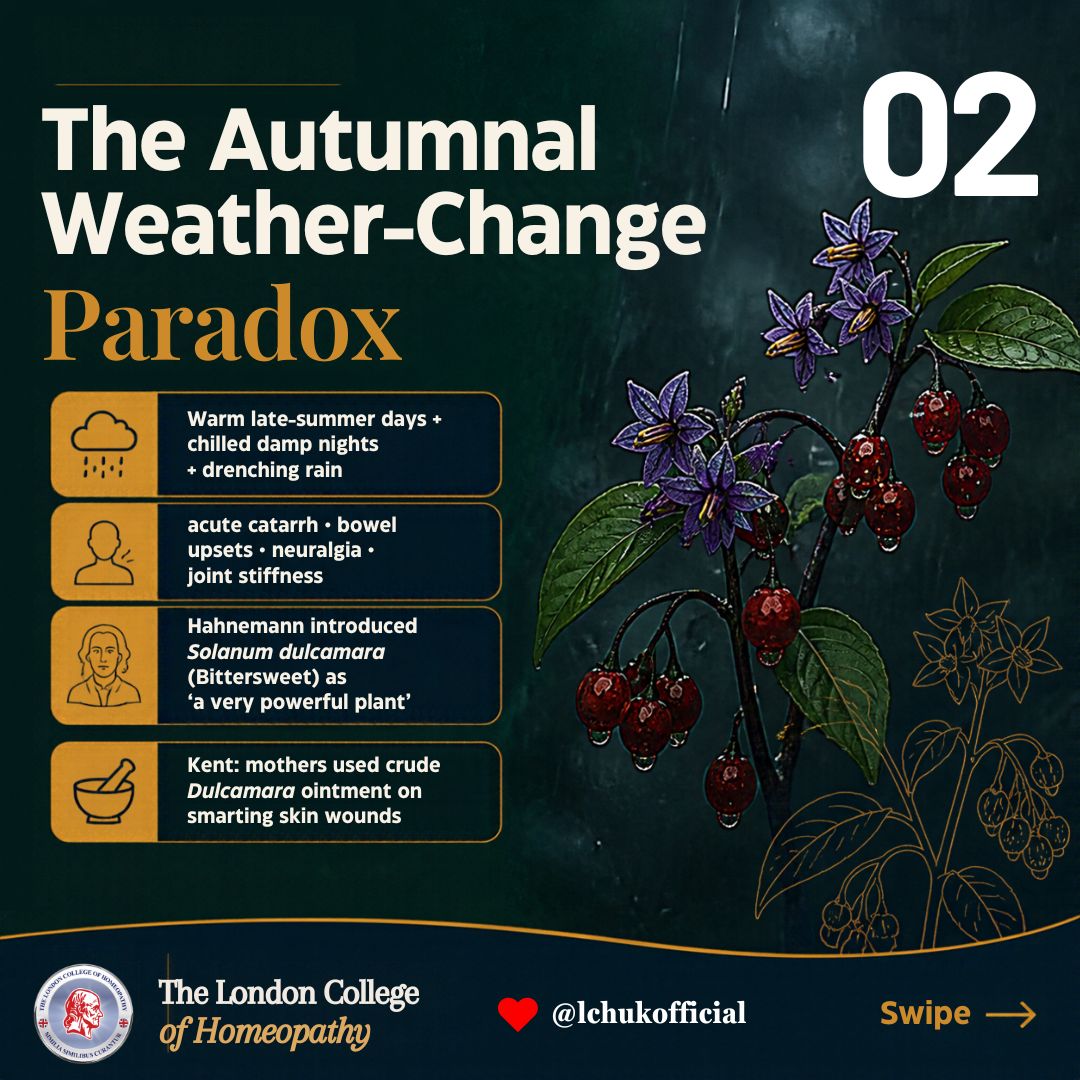
Suppressed Sweat Triggers an Internal Mucous Hypersecretion
The central pathological axis of Dulcamara revolves around the immediate suppression or checking of perspiration caused by damp cold, wet weather, or sudden temperature drops. When cutaneous elimination is rendered inactive, the organism compensates through a dramatic hyper-secretion across internal mucous membranes. This shift culminates in widespread catarrhal inflammation and profuse, thick discharges across multiple organ systems:
- Ocular and nasal discharges which are thick, yellowish, and profuse, often accompanied by granular lids. Dry coryza or profuse, thick, yellowish discharge may occur.
- Respiratory Catarrh: Excessive mucus production permeates the respiratory tract, manifesting as a loose, rattling cough, a hoarse spasmodic cough, or whooping cough laden with excessive phlegm. A picture of a dry, teasing winter cough or dyspnoea from asthma, where the patient is characteristically forced to cough for a prolonged period to successfully expel the tenacious phlegm.
- Gastrointestinal and Secretory Disturbance: Gastrointestinal catarrh produces profuse, loose, watery stools that are characteristically yellow or greenish, slimy, and mixed with undigested food particles. Stools may alternate between yellow and greenish mucus.
- Concomitant Febrile Profile & Sensorium: Pyrexia induced by exposure to cold, damp air or drenching rain demonstrates a strikingly slow onset. The fever is characterised by dry burning heat all over the body, accompanied by evening chilliness, marked thirst, dull headache, loose cough, and profuse yellow watery diarrhoea. Distinctly within the sensorium, Dulcamara presents a striking mental keynote: severe mental confusion where the patient simply cannot find the right word for anything.
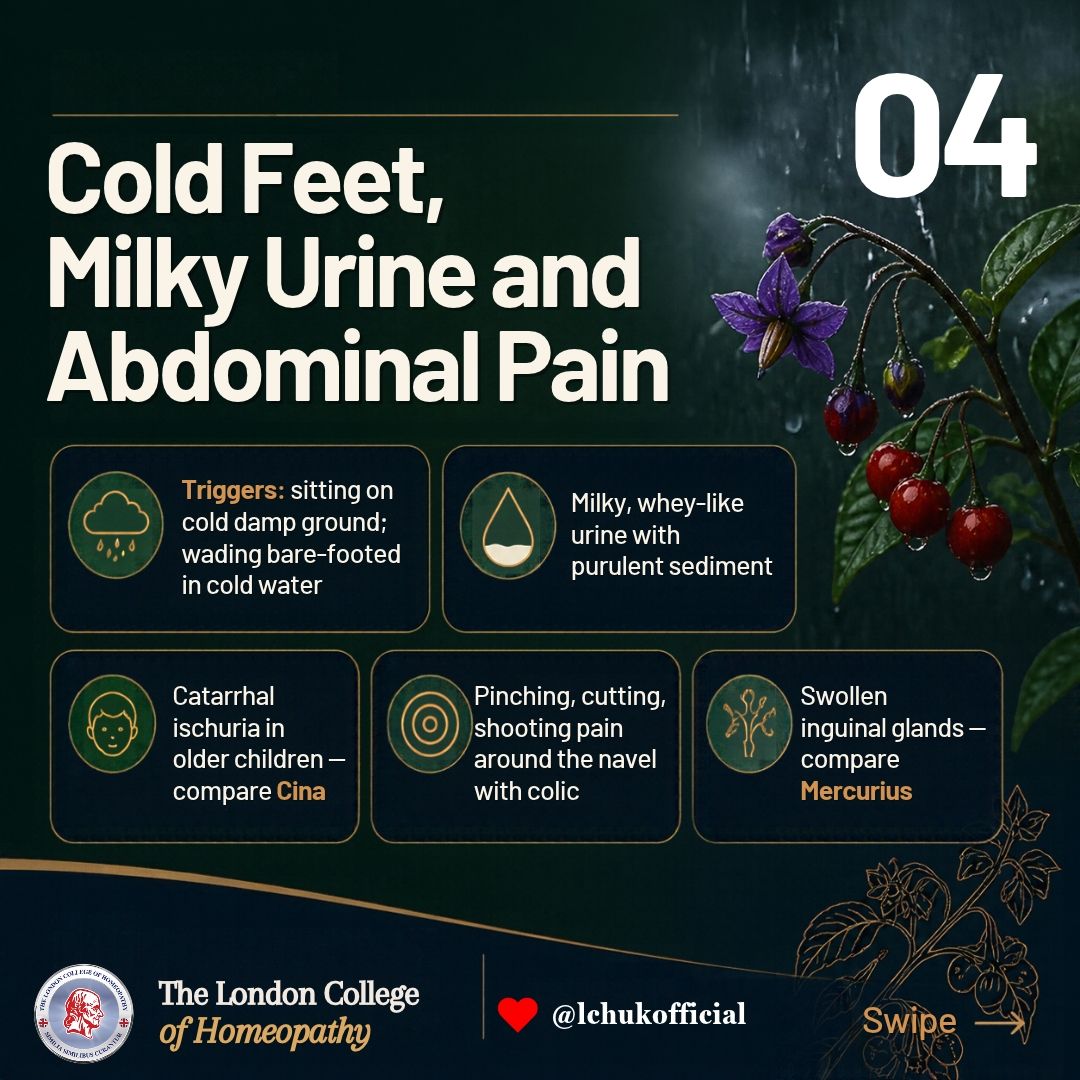
The Curious Case of Cold Feet, Milky Urine, and Abdominal Pain
Dulcamara displays explicit regional affinities, and paediatric keynotes are brought on by direct localised exposure to wet cold, such as sitting on cold, damp ground or wading in cold water with bare feet:
- Catarrhal Ischuria and Milky Urine: Ischuria featuring whey-like, milky urine—a striking keynote sharing clinical territory with Cina. The urine develops a thick, purulent, yellowish-white sediment upon standing and becomes exceedingly irritating, causing constant urging or involuntary urination as bladder catarrh flares up “like a flame.”
- Umbilical Distress and Glandular Affections: Recurring pinching, cutting, and shooting pain localised precisely at or about the umbilicus (navel), frequently accompanied by acute abdominal colic due to cold exposure.
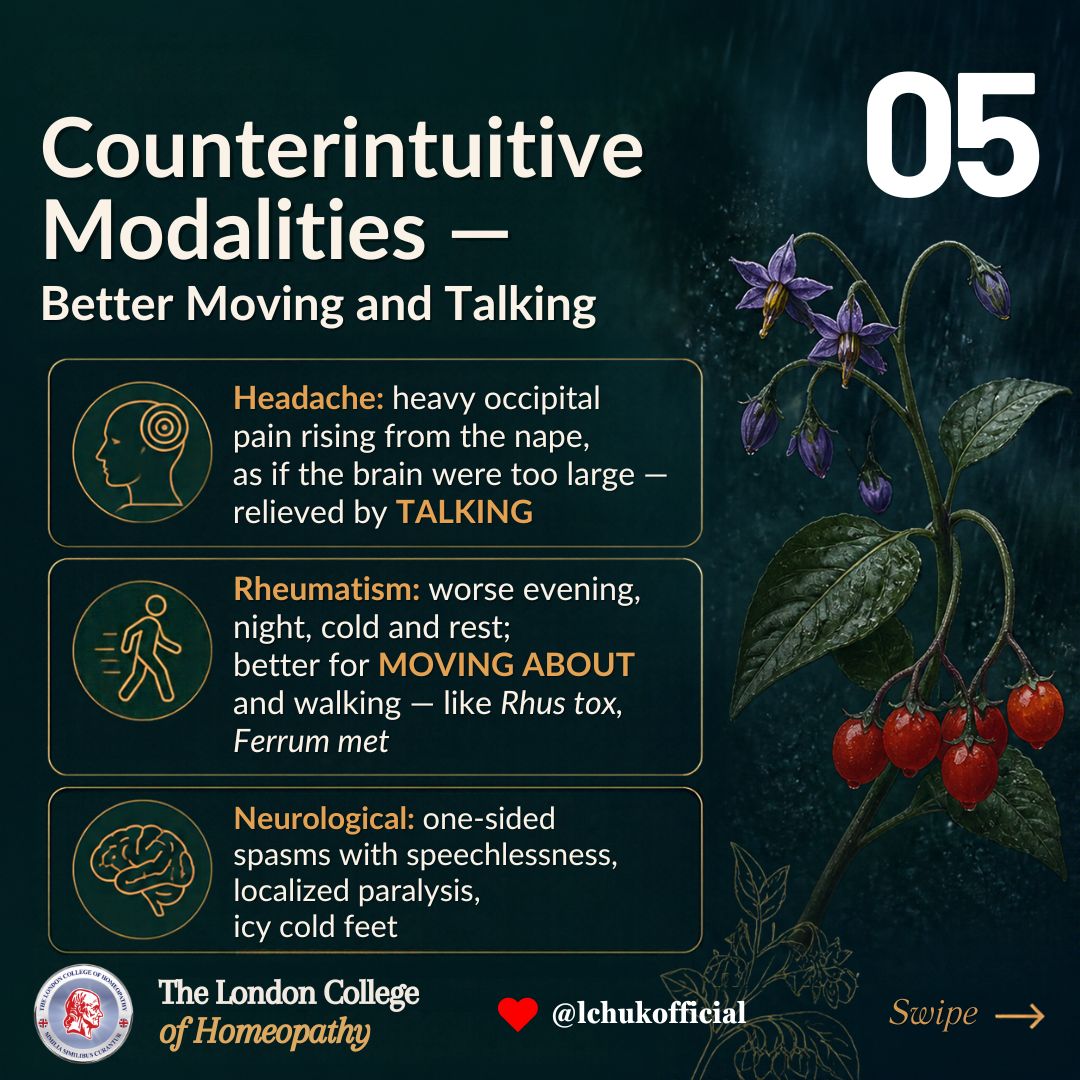
Counterintuitive Modalities — Relief Through Movement and Talking
While acute febrile, painful, or inflammatory states typically compel the patient toward absolute rest, Dulcamaraexhibits distinct counterintuitive modalities and neurological keynotes that differentiate it from neighbouring acute remedies:
- Headache Ameliorated by Talking: Dulcamara produces a heavy, occipital headache that ascends directly from the nape of the neck. The patient experiences a digging pain and a distressing sensation as if the brain were too large, accompanied by morning vertigo upon rising or walking. This stupefying head pain is relieved by talking.
- Rheumatic Relief Through Motion: Rheumatic inflammation, joint swelling, lameness, and bruised aching across the neck, shoulders, and back—precipitated by living in damp quarters, drenching rain, or abrupt seasonal shifts—are severely aggravated by evening, night, cold atmospheric changes, and rest.
- Paralytic and Neurological Manifestations: Deep cold exposure can penetrate beyond the muscular sphere to produce focal neurological deficits. Dulcamara covers one-sided spasms accompanied by speechlessness, localised paralysis of single parts, and paralysed limbs where the feet remain icy cold.
Eruptive Skin Troubles, Facial Neuralgia, and Disease Alternation
Dulcamara possesses an extensive affinity for the integumentary system and mucous cutaneous junctions, characterised by cellular effusions, eruptive manifestations, and striking clinical alternations:
Differentiating Skin:
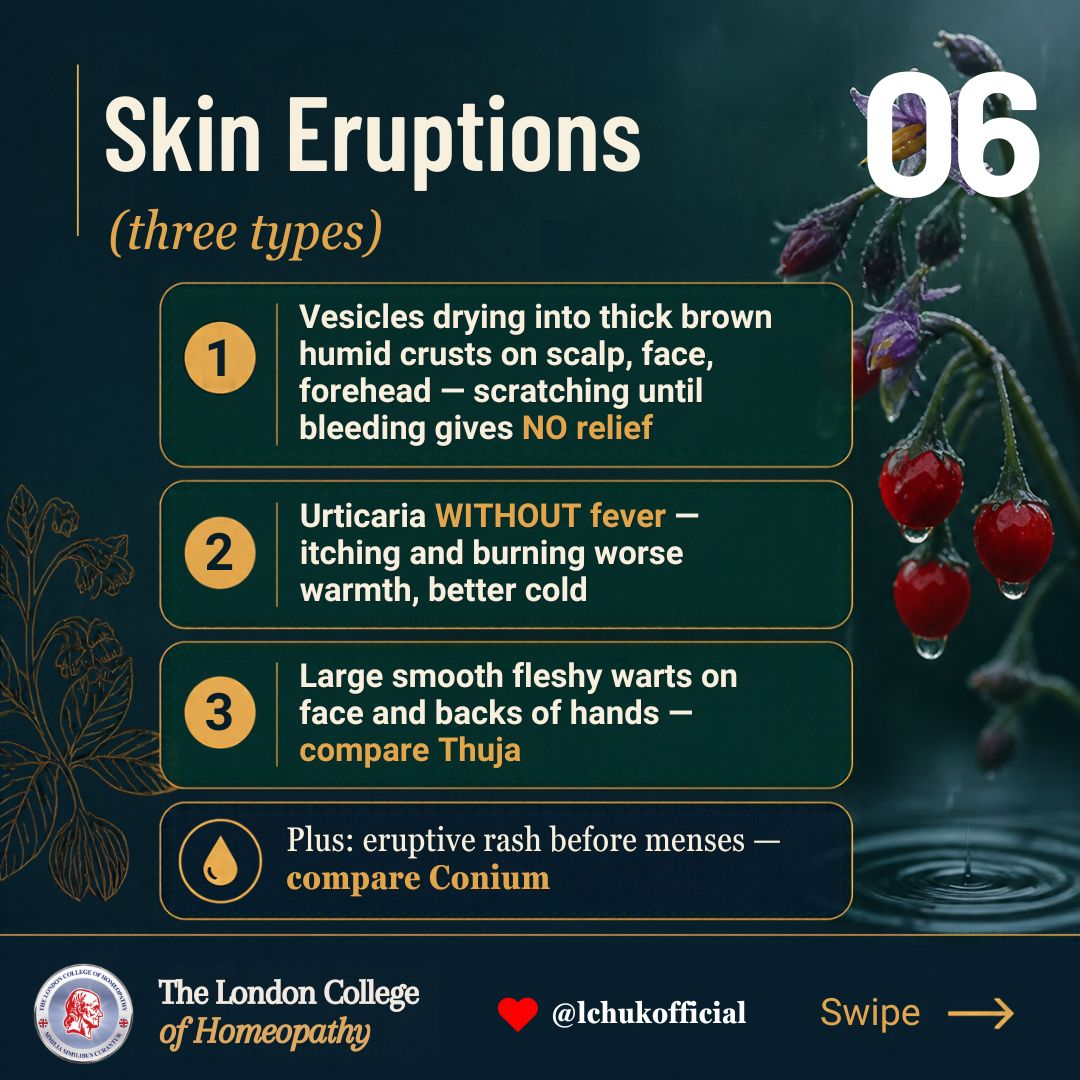
- Vesicular Crusted Eruptions: Intense itching and extreme soreness; the patient compulsively scratches until the skin bleeds, yet scratching provides absolutely no relief.
- Urticaria Without Fever: Itching and scratching are followed by burning sensations. Unlike the crusted lesions, the itching and burning of Dulcamara’s urticaria are aggravated by warmth and relieved by cold.
- Wart-Like Lesions: Characterised by large, fleshy, smooth, wart-like eruptions that appear prominently on the face and the backs of the hands and fingers—requiring careful differential diagnosis with Thuja.
- Catamenial Timing & Premenstrual Eruptions: A diagnostic timing keynote is the prompt appearance of an eruptive rash on the face, hands, and arms immediately preceding the menses, a feature shared with Conium.
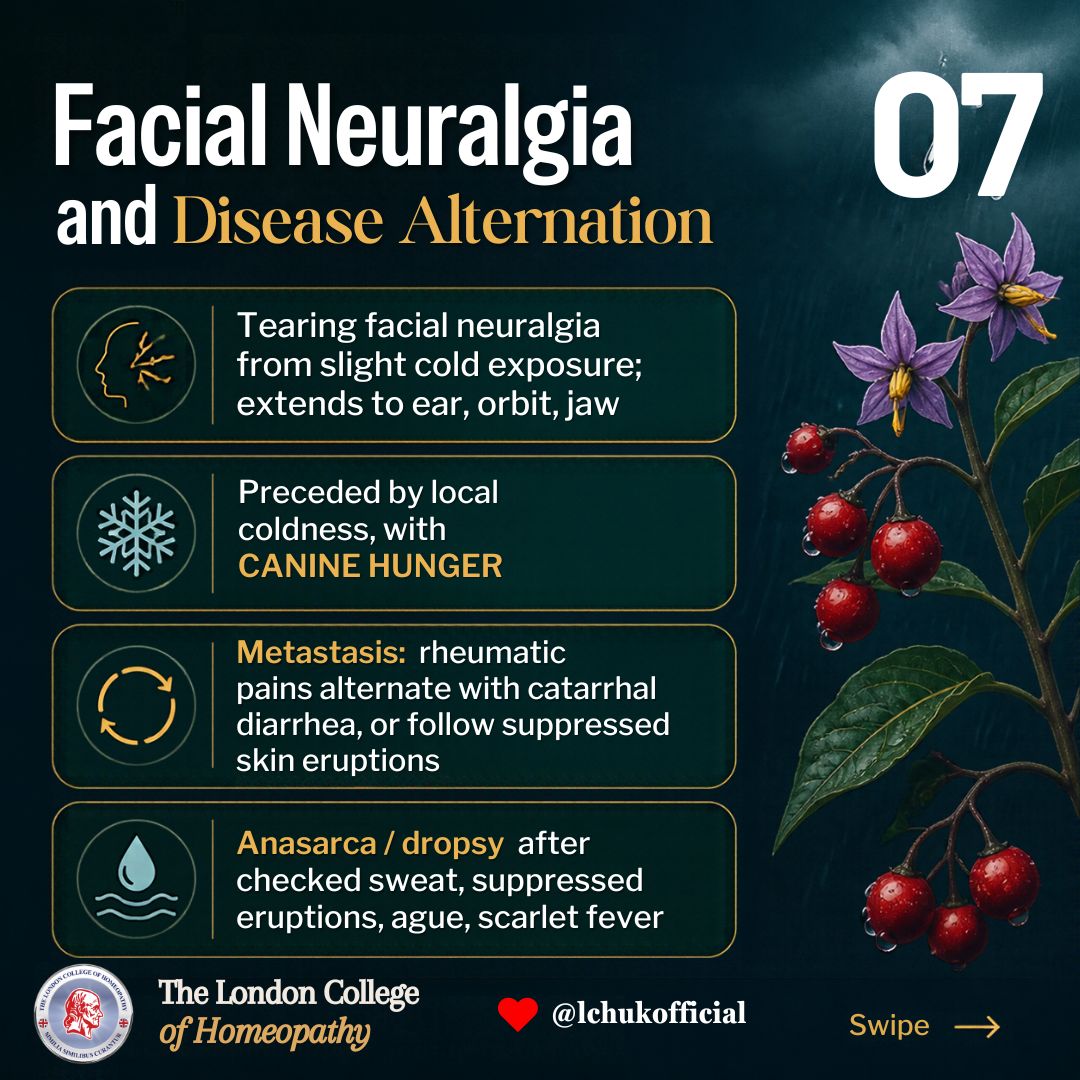
- Facial Neuralgia with Canine Hunger: Neuralgia is preceded by local coldness of the parts and is accompanied by a unique concomitant: canine hunger.
- Metastasis and Disease Alternation: Rheumatic joint pains regularly alternate with profuse catarrhal diarrhoea or emerge suddenly after acute skin eruptions have been artificially suppressed. Furthermore, generalised anasarca and dropsical effusions develop following checked sweat, suppressed eruptions, ague, scarlet fever, or direct exposure to damp cold.

Advancing Your Homeopathic Mastery
To deepen your mastery of polychrest remedies, refine your differential diagnostic precision, and elevate your clinical outcomes, continue your professional education with our faculty. Explore advanced diploma and postgraduate diplomas & structured technical courses at The London College of Homeopathy today.
Disclaimer: This post is not medical advice / endorsement or a replacement for a doctor’s discretion of treatment. The information provided here is purely for information and discussion purposes. Please seek appropriate medical advice from your nearest medical/health professional.